FKM Fluoroelastomer Seals

FKM Fluoroelastomer Seals

FKM Fluorocarbon Elastomer Seals

Designing sealing protection for harsh environments remains a continuing challenge in many industries. One of the best solutions for long-term efficiency and reliability is the use of fluorocarbon elastomers (FKMs).

FKM polymer is the generic reference for fluoroelastomers in ASTM D1418. Initially developed over half a century ago, this synthetic rubber offers outstanding resistance to chemicals, oils, fuels, and temperature extremes, as well as superior performance in other critical areas. According to the International Institute of Synthetic Rubber Producers, today’s FKM polymers have a much broader fluids resistance profile than standard fluoroelastomers. In addition, they are able to withstand strong bases and ketones as well as aromatic hydrocarbons, oils, acids, and steam.

Uses of Fluoroelastomers:

Examples of end-use in industrial, oil and gas, aerospace & defense, automotive, and other manufacturing applications include:FKM Fluoroelastomer Seals

  • Diaphragms
  • Electrical connectors
  • Expansion joints
  • Fuel systems
  • Firewalls
  • Hydraulics systems
  • Jet engines and manifolds
  • Lubrication systems
  • Oilfields
  • Valve liners and stems

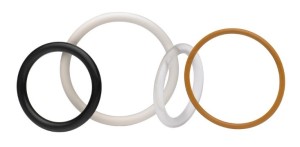
Current categories of fluoroelastomers are based on chemical makeup and structure as well as the amount of fluorine added, to meet specific needs in differing environments. Web Seal can provide engineered gaskets, O-rings and molded shapes made from a wide variety of FKM fluoroelastomers, including DuPont’s Viton®.

Define Your Requirements

To help you find the best FKM for your use, be specific in defining your requirements:

What is your chemical media exposure?

Chemical Resistance: Fluoroelastomers perform reliably under severe chemical where many other seal materials cannot survive, especially when in contact with petroleum fuels and many solvents. FKM formulations are tailored for:

  • Mineral-based oils, acids, grease and hydraulic fluids
  • Aliphatic hydrocarbons (butane, propane, natural gas)
  • Chlorinated hydrocarbons (trichloroethylene, carbon tetrachloride)
  • Gasoline, including resistance to rapid gas decompression
  • Steam and hot water (in customized compounds)

What are the temperature ranges of your environment?

FKMs have been developed to meet a wide range of extreme temperatures.

Heat Resistance: FKMs have excellent resistance to high temperatures, up to 204ºC/400ºF.

Cold Flexibility: Fluorocarbon components can create effective seals at temperatures as low as -26ºC/-15ºF.

What mechanical stresses are involved?

FKMs are available for static and a variety of dynamic applications, electrical properties, and hardnesses.

What is the compression load?

Fluorocarbon elastomers have superior compression set and recovery characteristics, especially important in critical areas such as risk to life or danger of environmental damage.

What other issues are important for seal design in your overall application?

  • Aging
  • Flame Retardance
  • Gas Permeability
  • Use in a Vacuum
  • Weathering and Ozone Resistance
  • Installation Process
  • Steam or Hot Water

While FKM fluorocarbon elastomers is a more expensive option, their use may actually save significantly on downtime and replacements, offering a savings of labor, parts and productivity costs over the life of the product.


Photo Credit:

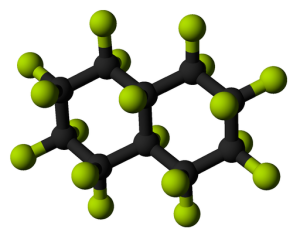
"Perfluorodecalin-3D-balls" by R8R Gtrs (Own work) [CC0], via Wikimedia Commons


Parofluor V8545-75 Seals

Parofluor™ V8545-75 Seals

Space-Age Sealing Material Meets Stringent Spec

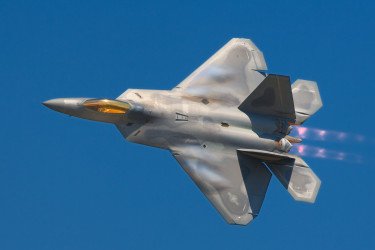
Parofluor™ V8545-75 SealsParofluor™ V8545-75, a highly-engineered space-age material from Parker, meets rigorous AMS 7257C standards that aerospace and aircraft manufacturers need for mission-critical sealing applications. This unique perfluorinated compound has proven excellence in thermal stability and resistance to both compression set and fluids and chemicals in extreme temperatures.

V8545-75 is one of the latest of Parker’s Parofluor compounds formulated to provide reliable and cost-effective sealing capability in critical applications where complete conformance to spec and highest performance are required, especially in aerospace and aircraft industries.

Test results show that Parofluor™ V8546-75 Seals:

  • Offer excellent resiliency and retain elasticity to maintain seal integrity and leak-free performance throughout the service temperature envelope
  • Have an upper operating temperature of 300°C (572°F)
  • Provide consistent sealing functionality in conditions where common fluorocarbon and other traditional elastomers cannot survive, with good to excellent resistance to more than 2,000 fluids and chemicals in extreme temperature environments, including these typical aerospace/aircraft fluids:
    • Parofluor V8545-75 SealsJP-4
    • JP-5
    • JP-8
    • Jet A
    • Jet A1
    • Mobil 254
    • Mil-H-83282
    • Mil-H-5606

Photo Credit:

Lockheed Martin F-22A Raptor JSOH" by Rob Shenk from Great Falls, VA, USA - F-22 Raptor Uploaded by Diaa abdelmoneim. Licensed under CC BY-SA 2.0 via Commons.


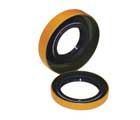
yellow Parker oil seals

Creating a Perfect Oil Seal

A good oil or radial shaft seal is designed to either keep oils or other fluids from leaking out of a mechanical component or to keep contaminants from finding their way in, and many times both.

yellow Parker oil seals

Pumps, mixers, motors, turbines and gear boxes in a variety of industries are susceptible to problems that can be caused by an inadequate sealing system.

To create the perfect oil seal for your equipment, an understanding and an anticipation of the potential damaging factors for your rotary seal are essential.

With the failure of an oil seal, the liquid or gases you are trying to protect could be affected by:

  • An increase of oxidation
  • A decrease in viscosity
  • Unwanted aeration
  • Chemical and physical changes, such as the depletion of additives, increased TAN, sludge or varnish

Your equipment can also be impaired by a failed oil seal by creating:

  • Improper film thickness on the shaft due to excessive lip wear
  • Corrosion
  • Cavities or pits

Determining the best oil seal for your application needs requires a quick review of all installation parameters and operating conditions that will affect the seal including:

  • Shaft finish
  • Shaft speed
  • Internal pressure
  • Operating temperature
  • Fluid compatibility

Leakage can occur at both the seal inside diameter or housing bore diameter.

Static leakage can occur at either.   Leakage occurring at the press-fit at the seal’s outside diameter (OD) can be a result of:

  • the housing bore being too rough
  • damage to the OD during installation (70% of all seal failures are due to cocking during installation)
  • inadequate press fit, due to out-of-range bore tolerance, incorrect seal OD for the bore diameter, or a severely rusted or pitted bore

Leakage at the sealing lip can be caused by damage during installation, shaft condition, or poor internal lubricant draining.

Dynamic leakage normally occurs only at the sealing lip, with damage to the radial shaft seal itself, from poor seal fit, or from operating conditions in excess of those recommended by the manufacturer.

The Seal Specialists at Web Seal can recommend the best sealing solutions for your needs.  We offer more than 700 English and metric Parker and Clipper oil shaft seals for all applications, in sizes ranging from .250” up to 72”.  Traditional metal canned and rubber-coated designs are available along with one-piece bonded seals (typically PTFE-to-elastomer).

We can also help you create any specialty seal design for your specific equipment needs.

Click here for design assistance or to request a quote.

Parker logo

Parker Hannifin Recognizes Unique Half-Century Partnership with Web Seal

ParkerLEXINGTON, KY – Web Seal Inc. has been recognized by the Seal Group of Parker Hannifin Corporation for fifty years of dedicated service and support as a distributor, according to Kurt Keller, group president.

Keller presented the partnership award to John F. Hurley, president of Web Seal, at the Parker Seal Group’s national sales and distribution conference held in Lexington, KY, Oct. 9.

A significant milestone, the distinction has only been awarded to a handful of Parker Seal distributors.  In addition to the announcement, Keller and other Parker managers sponsored an elegant al fresco luncheon at Web Seal’s Rochester, NY, headquarters in the spring where they personally thanked all members of the Web Seal staff.

In return, Web Seal honored the long-term partnership with an historical exhibition of Parker memorabilia and photography, and a “pay-it-forward” donation to Big Brothers/Big Sisters.

Established in 1918 as Parker Appliance Company, Parker Hannifin today is a Fortune 500 company and the global leader in motion and control technologies.  Parker’s Seal Group develops and manufactures technologically advanced sealing devices and materials required by modern machinery.

Web Seal’s founder Donald L. Hurley began Web Seal’s operations in a basement office in 1960 and incorporated the business in January 1963.

BBBS Logo

Big Brothers/Big Sisters Receives Surprise Donation from Web Seal

ROCHESTER, NY – Tina Christensen, executive director of the Greater Rochester chapter of Big Brothers/Big Sisters (BB/BS) was a somewhat bewildered but good-natured guest at a private corporate luncheon this week.

BBBS LogoInvited to attend the event at Web Seal, a fabricator and distributor of industrial sealing products, located on Oregon Street in the downtown Cumberland Industrial District, Christensen was glad to meet a new segment of the community.

The reason for the event was to celebrate Web Seal’s fifty years as a distributor of the international manufacturer, Parker Hannifin.  Members of Parker’s senior management sponsored the affair, and were on hand to congratulate Web Seal’s staff for their record of dedicated service and support over five decades.

In response, John F. Hurley, president of Web Seal and a former Big Brother, decided to “pay it forward” with a surprise donation of $500 to BB/BS.  “Big Brothers/Big Sisters is all about the mentoring relationship,” he said.  “We are grateful to have had a special relationship with Parker for all these years and we’d like to express our gratitude by helping the critical relationships fostered by another group, Big Brothers/Big Sisters.”

Hurley was previously a Big Brother in Miami, FL, and company Vice President Donna Mihalik previously served on several BB/BS boards of directors.

Web Seal is pleased to be a supporter of the Big Brothers/Big Sisters organization, and encourages the mentoring relationshipTo volunteer, or for more information, click here for the Greater Rochester chapter, or www.bbbs.org for the national organization.