Elastomer Materials
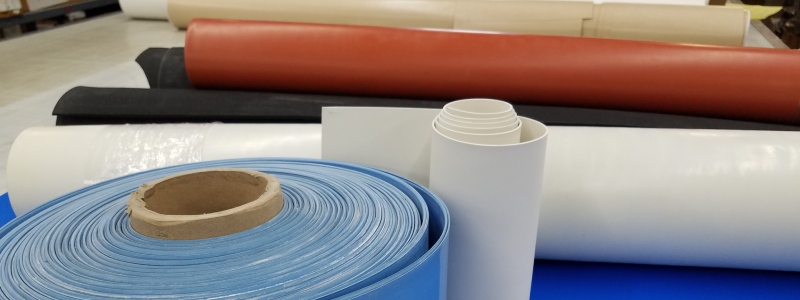
Web Seal fabricates gaskets, pads, cushioning, and customized shapes in a wide array of commercial, Mil Spec, and ASTM - grade elastomeric materials , as well as from proprietary and customer-supplied materials.
Elastomers
Web Seal provides an extensive range of elastomeric materials for gaskets and custom die-cut parts, as well as in sheet form. We can assist you in determining which performance qualities are most critical for your application: sealing, reliability, durability and/or flexibility.
Elastomers are a special class of polymers that exhibit both viscosity and elasticity. Elastomers have a high degree of elasticity; they can be stretched extensively but bounce back without permanent deformation. Because of this superior resistance to breaking and cracking, elastomers are the most common materials used for a variety of sealing applications.
To be considered an elastomer, the material must meet the following criteria:
- Remain intact when stretched to double its original length
- Retract to approximately one-tenth of original length after being stretched to 100% for five minutes
Web Seal can provide you with the proper compound and performance grade for your application.
Types of Elastomers
Molecularly, elastomers consist of polymers, long chainlike molecules with many repeating units, joined by loose chemical bonds. Depending on how the patterns of polymers and their chemical bonds are modified, elastomers are created with a variety of different properties. There are thousands of compounding ingredients available to create distinct performance characteristics.
Elastomers can be either thermoplastic or thermoset. A synthetic rubber that can be remolded when heated is a thermoplastic elastomer, allowing the rubber to be easily shaped or worked. Thermoplastic rubbers offer good performance for oil, fuel and ozone resistance. When the elastomer needs to be more durable or withstand more extreme temperatures, it can be vulcanized. This creates a thermoset elastomer, which cures irreversibly. Therefore, vulcanized gaskets must be pre-formed into the required sealing shape unlike the more pliable thermoplastic rubbers.
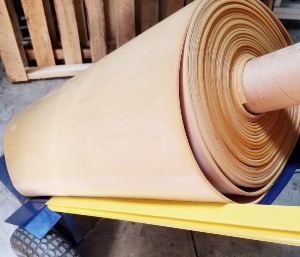
Natural “gum” rubber (polyisoprene) is harvested from trees, mainly in the form of latex, and is typically a beige color. It is extremely flexible with an excellent stretch ratio, waterproof, resilient, and has good abrasion resistance. It is often further refined for commercial use, and vulcanized to improve on its elasticity and shelf-life.
Temperature range: -67°F to +180°F (-55°C to +82°C)
Chemical resistance: most salts, alkalis, acids, and ammonia
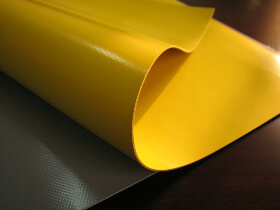
One of the first synthetic rubbers to be developed, Neoprene® (polychloroprene) is versatile and tough, resistant to solvents, temperature, ozone, weathering, and water or soil immersion. This all-purpose material exhibits good chemical stability and maintains flexibility over a wide temperature range. It is used in a variety of chemical and weather-resistant functions such as tank linings, chemical apparatus, automotive, industrial and construction applications, underwater clothing and as crepe soles for shoes. Typically black, Neoprene® is also available in a wide variety of colors.
Temperature range: -40°F to +250°F (-40°C to +121°C)
Chemical resistance: ammonia, carbon dioxide, oxygen, ozone, silicone oil and grease, refrigerants, ultraviolet light, water and water solvents (at low temperatures), and wax
Buna (Bu for butadiene, Na for sodium) is a very popular and economical synthetic elastomer for seals, typically black or white, that has low compression set. Buna-N (NBR or nitrile rubber) is a copolymer of acrylonitrile (ACN) and butadiene.
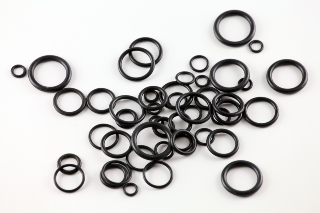
NBR has good abrasion resistance, high tensile strength, excellent resistance to oils, and good mechanical properties when compared with other elastomers. Variations of NBR include:
- Carboxylated Nitrile (XNBR) - greater abrasion and tear resistance, excellent in dynamic applications
- Hydrogenated Nitrile (HNBR) - high strength and other superior mechanical properties
While typically black, Buna-N is available in a wide range of custom colors.
Temperature range: -30°F to +225°F (-34°C to +107°C)
Special formulations can withstand -70°F (-56°C)
Chemical resistance: water; diluted acids, alkali and salt solutions (at low temperatures); butane, diesel fuel, petroleum and fuel oils, propane, vegetable and mineral oils and greases
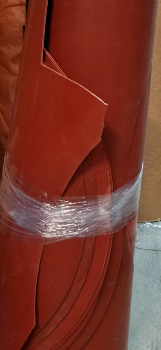
Buna-S (SBR or styrene-butadiene rubber) is a synthetic rubber copolymer blended with natural rubbers, also referred to as red rubber. It offers an economical alternative to natural rubber, with many similar properties, that serves well as all-purpose gasketing material. It has good aging stability, tensile strength and resistance to abrasion, and conforms well to uneven surfaces. Buna-S is often used in sealing components for brake fluids.
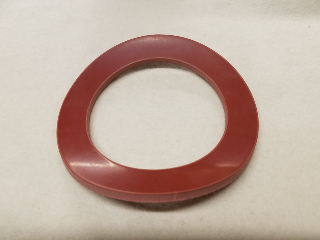
Temperature range: approximately -70°F to +225°F (-57°C to +107°C)
Chemical resistance: acetone, weak acids, alcohol, glycol, non-mineral oil-based brake fluid, silicone oil and grease, and diluted water solutions
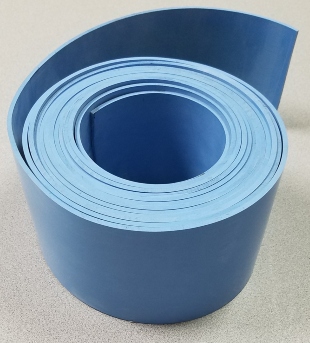
EPDM (ethylene propylene diene monomer) is a versatile, durable and low-cost synthetic rubber with better resistance to ozone, light, heat, steam and water than other elastomers. Its resistance to cold temperatures and weathering makes it an excellent choice for freezer or long-term outdoor environments. EPDM material is typically white, grey or black, but color can be customized.
Temperature range: -70°F to +250°F / 300°F (-57°C to +121°C / 148°C)
Chemical resistance: many acids, cleaning agents, alcohols, esters, glycol-based brake fluids, hydraulic fluids (HFD-R), ketones, silicone oil and grease, sodium and potassium alkalis
Fluoroelastomers, or fluorocarbons, are soft, flexible synthetic rubber compounds with fluorine that exhibit outstanding resistance to abrasion, aging and weathering, most chemicals and chlorinated solvents, oils, and fuels. They are waterproof, non-stick, relatively insensitive to power frequencies, and are good in high vacuum applications. Fluoroelastomers are excellent for more challenging applications, with resistance to flame and high temperatures.
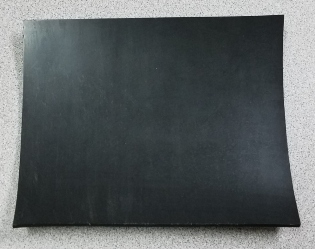
Fluoroelastomers are also referred to as FKMs or FPMs. A popular version for sealing components is Viton®, the registered brand of The Chemours Company, a spin-off of DuPont, which developed the first FKM. Viton®, as well as Parker’s ULTRA™ and Hifluor™ compounds, have excellent compression set, and resistance to aggressive chemicals and elevated temperatures.
High-performance perfluoroelastomers (FKKMs), such as Kalrez® and Parofluor® are compounded with higher amounts of fluorine, offering the best thermal and chemical resistance of all fluorocarbons. They are especially useful in aerospace, chemical processing, semiconductor, fuel, and pharmaceutical industries.
While fluoroelastomers are available in black as well as many colors, Viton® is often distinguished by its brown or green color.
Temperature range: -15°F to +400°F (-26°C to +204°C)
Some compounds can resist cold to -40°F (-40°C)
Chemical resistance: benzene, butane, chlorinated hydrocarbons, non-flammable hydraulic fuels, natural gas, mineral oil and grease, ozone, silicone oils and grease, propane, and toluene
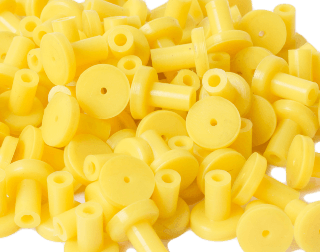
Silicone rubber (vinyl-methyl-silicone) is a reliable and versatile elastomer, known for its low toxicity and high heat resistance, combining silicon with carbon, hydrogen and oxygen. It has good insulating properties and weather resistance, with excellent performance in extreme environments. As it is highly inert, it is biocompatible and hypoallergenic, making it very useful in medical and food applications. Silicone is available in many special grades, with a wide selection of characteristics, range of hardness levels, and in nearly any color.
Temperature range: -75°F to -65°F (-59°C to -54°C) and +400°F (+204°C)
Chemical resistance: animal / vegetable oils and grease, brake fluids, coolants, diluted salt solutions, engine and transmission oil, fire-resistant hydraulic fluids, flame-resistant insulators, ozone, and water
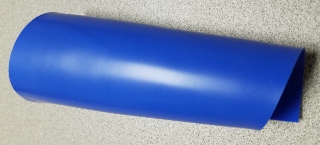
Fluorosilicone (fluorovinylmethylsiloxane) is the only fuel-resistance elastomer that remains stable with the widest operating temperatures. This synthetic rubber that has nearly the same properties as silicone but, with the addition of fluorine, has greater resistance against many fluids, chemicals and solvents. Along with high thermal stability and reliable compression set, it has superior environmental resistance and excellent low temperature flexibility. It is often used in static applications for automotive or aerospace fuel systems, as well as in electronic, dairy and medical industries.
Fluorosilicone, naturally a beige color, is typically dyed blue to distinguish it from other elastomers.
Temperature range: -100°F (-73°C) to 350°F (+177°C)
Chemical resistance: amines, aromatic mineral oils, benzene, concentrated acids, fuels, phosphate esters, and toluene
A thermoplastic elastomer is a rubber-like material that has both thermoplastic and elastomeric properties. Thermoplastics are available in a wide range of colors.
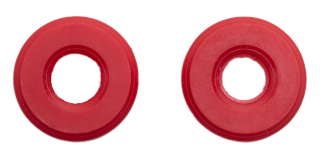
Santoprene™ is an engineered thermoplastic elastomer (TPV), a registered brand of ExxonMobil (originally developed by Monsanto), often used in semi-dynamic and static parts. Composed of fully cured EPDM particles in a polypropylene medium, it combines the many benefits of rubber, such as good compression set and aging performance, with the ease of plastics processing, which allows for more flexible and lightweight part designs. It is a reliable compound for flexible parts with long-term performance needs, frequently used in appliances, automotive, construction, electrical, and life science applications. Santoprene™ can be recycled within the manufacturing process.
Temperature range: -81°F (-60°C) to +275°F (+135°C)
Chemical resistance: air, chemicals, fluids, grease and oil, heat and extreme temperatures, harsh environments, water
A wide range of other elastomers is available, each with special characteristics to accommodate a nearly unlimited array of applications, including:
Butyl (IIR) – isobutylene, a harder, less porous elastomer; excellent impermeability to air, robust resistance to chemical warfare agents and decontamination materials, good electrical properties
Epichlorohydrin (ECO) – similar to nitrile rubber but with enhanced resistance to fuel, heat, oil, and ozone, and improved flexibility in low temperatures; very low gas permeability, good compression set, excellent resistance to alkalis, hydrogen peroxides, and weathering
Ethylene Acrylate (AEM / Vamac®) – durable in environments with diverse chemical exposure, broad temperature range, good resistance to abrasion and service fluids, retains sealing properties under compression, less sensitivity to oil additives
Hypalon™ – the common name for all types of chlorosulfonated polyethylenes (CSMs), durable and waterproof, good resistance to ultraviolet light, extreme temperatures, and chemicals, acts as a lighter, stronger alternative to similar elastomers
Polyacrylate (ACM) – synthetic rubber composed of acrylic monomers, superior resistance to oxidation, weathering, and hot oil, low permeability to gases, commonly used in automotive components and vibration dampening
Tetrafluoroethylene-Propylene (AFLAS®) – partially fluorinated polymer with excellent chemical resistance across a range of aggressive media, similar properties to other fluoroelastomers; while more expensive than most elastomers, it is worthwhile in harsh environments his material is a copolymer of TFE and Polypropylene
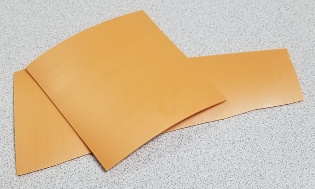
Urethane (AU, EU) – a versatile elastomer with high tensile strength, higher elasticity than many elastomers, excellent wear resistance, good permeability, high load capacity, performs well in high flex fatigue applications, good electrical insulator; variety of colors with ability to include ultraviolet (UV) shielding in pigments for outdoor applications
Vulcanized Rubber
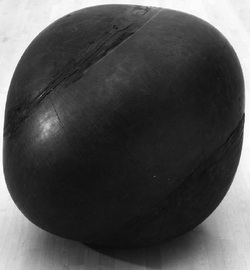
The process of vulcanizing rubber was invented by Charles Goodyear in 1839 to create more durable elastomers. Instead of the loose crosslinking of the standard polymer molecules in rubber, vulcanized rubber molecules are crosslinked together into one large molecule.
During the curing process, or vulcanization, the rubber polymer is heated and combined with additives (accelerators, antioxidants, curatives, plasticizers, reinforcing fillers, or other polymers). These new molecular crosslinks produce an elastomer with increased durability while maintaining varying degrees of elasticity and resilience. When stress is applied, vulcanized rubber deforms but returns to its original shape once the stress is removed.
Vulcanized materials are less sticky and have superior mechanical properties:
- high degree of insolubility
- swelling in the presence of certain solvents
- inability to melt (instead they turn into gases)
- low creep resistance