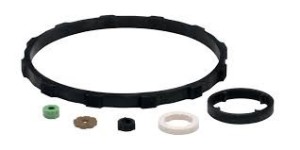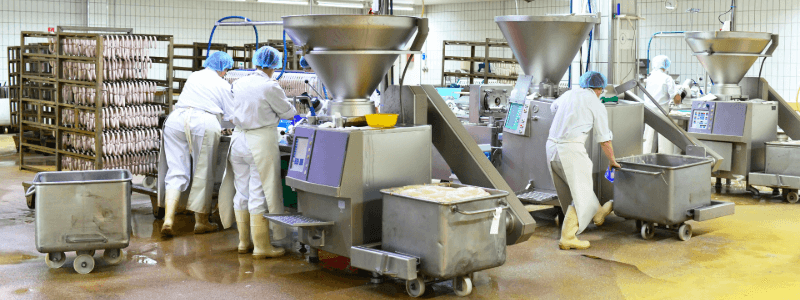
PUR-GARD™ FDA-Compliant Seals for Food Processing

PUR-GARD™ FDA Compliant Seals

Garlock PUR-GARD™ FDA Compliant Seals for Food Processing

[floatbox title="PUR-GARD Bearing Isolator Seals" style="width: 39%; float: right; margin: 15px;"]
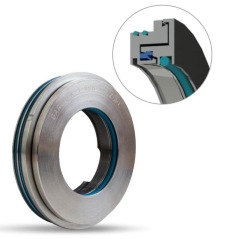
PUR-GARD FDA-Compliant Seals

Garlock's PUR-GARD FDA compliant seals, available from Web Seal, are the newest bearing isolator seal in Garlock's FDA-compliant Klozure® series.

The unique Cam-Lock O-ring groove design includes a 316 stainless steel stator and rotor and FKM O-rings, with a unitizing ring that eliminates metal-to-metal contact between the stator and the rotor.

This non-contact assemblage reduces both energy use and shaft drag.[/floatbox]

PUR-GARD™ FDA-compliant seals use a patented labyrinth design that meets IP66 (ingress protection) standards and provide superior sealing solutions for rotating equipment in food and beverage processing applications.

Designed with materials that are FDA-compliant, metal detectable and x-ray inspectable, PUR-GARD bearing isolator seals are a new type of seal that improve overall process purity and safety, even in the most challenging environments.

These bearing isolator seals are typically used in pumps, motors, gearboxes and other rotating equipment exposed to heavy wash down and /or zone 1 and 2 applications. They can withstand temperature ranges of -22°F to 400°F (-30°C to 204°C), surface speeds to 12,000 FPM max (60.9 m/s), axial motion to +/-0.015" (0.38mm), and ambient pressure.

Downtime and maintenance concerns are often caused by the effects of daily wash down processes wearing away bearings and equipment. High-pressure sprays and dust particulates are also problematic. The improved sealing technology of PUR-GARD™ isolator bearing extends the life of processing equipment, saving substantial time and costs while providing the highest safety and product integrity.

Installation is easier also, with an assembled construction that will not come apart during installation, can be simply installed hand without the need for an arbor press tool.

Web Seal can provide PUR-GARD bearing isolator seals in various configurations, including flanged, split option, vertical, step shaft, split pillow block, small cross-section (all IP66), flangeless and flangeless narrow width (both IP55).

More information about Garlock's PUR-GARD™ FDA-Compliant Seals is available from Web Seal or on the Garlock website. You can also download a PUR-GARD™ bearing isolator PDF brochure.

Gasket fabricated from Garlock Multi-Swell Style 3760

Sealing Low-Compressive Loads with Multi-Swell™ Style 3760

The New Multi-Swell™ Style 3760 Gasketing Material

When you can’t get an effective seal because the compressive load on a gasket is too low, or because the flanges aren’t rigid enough to compress standard gasketing material in the areas between bolts, Web Seal recommends the new Multi-Swell Style 3760 gasketing material from Garlock.

Multi-Swell™ is a combination of aramid fibers with a unique rubber binder, producing a highly compressible material.  Aramid fibers are composed of lightweight, high-strength reinforcement polymers that provide great flexibility as well as resistance.  The Multi-Swell™ material, interacting with water or oil, creates a seal by causing the gasketing material to swell, thereby creating load.

Ideal for compressors, generators, pumps, fuel pumps, gear boxes, cast water flanges, transformers, access, and other covers, Multi-Swell™ minimizes waste and reduces maintenance.  It can help cut down on inventory, too, by replacing gaskets that swell in oil only.

Benefits of Multi-Swell Gasketing Material

There are a number of advantages in fabricating gaskets using Multi-Swell™ Style 3760 over standard elastomeric or cloth-inserted gaskets:

  • More compressible and seals with low loads
  • Handles much higher flange loads
  • Operates at much higher internal pressures
  • Does not weep, improving plant safety

Use in environments between -100˚F and 400˚F (continuous operation), with maximum pressure of 500 psi.

For NSF 61 requirements (drinking water), specify Multi-Swell™ 3760-U.

Web Seal can provide prototypes and custom fabricated parts from Multi-Swell™ Style 3760 for your specific applications.

A variety of ProTech bearing isolator sealsr Seals

ProTech™ Bearing Isolator Seals

Parker’s ProTech™ bearing isolator seals feature a unique labyrinth design that provides unmatched two-way sealing for both zero lubricant leakage and total exclusion of contaminants.

Its advanced proprietary PTFE compounds make ProTech well-suited for caustic, high-speed, and high-temperature environments. These highly chemical-resistant seals perform well in high-speed and high-temperature environments.  For example, ProTech is well suited for caustic environments such as citric acids in juice processing and strong sulfides in pulp and paper processing.

This bearing isolator is a unitized, two-piece non-contact design that offers extended bearing life.    It is this characteristic labyrinth technology that provides contaminant exclusion instead of an internal O-ring protection. 

ProTech™ bearing isolator seals offer an answer for applications where improving the mean time between failure (MTBF) is critical. The ProTech family relies on true non-contact labyrinth seal technology to provide 100% exclusion of contaminants and 100% retention of bearing lubrication for the life of the bearing. 

The superior quality and high performance of ProTec™ seals make it the ultimate in bearing protection.  Parker, the innovation leader in bearing isolator technology, has designed this unique sealing component to deliver maximum protection for a multitude of applications.

Web Seal can provide ProTech seals in many standard and custom designs, with support to ensure that the proper isolator for your equipment and application is recommended. Expedited delivery is available.

Characteristics of ProTec Bearing Isolator Seals

  • Unmatched corrosion resistance  
  • Allows for standardizing a single material in your plant
  • Extends bearing life as the unique technology eliminates wear associated with internal O-rings, PTFE elements, or other locking rings
  • Zero lubricant leakage
  • Total exclusion of contaminants, including dirt exclusion and oil retention
  • Multiple design availability, with more than a dozen standard and several custom configurations, allows for ease of retrofitting most equipment
  • The Millennium® metallic-style profile is available in bronze, 302 SS, 304 SS, 316 SS, and carbon steel
  • The ProTech 360 is designed for flooded oil and oil mist applications
  • Independently tested to IEEE IP55, IP56, and IP66
  • ProTech WD design for the food processing area meets IP69k
  • Exceeds IEEE-841 for electric motors
  • ProTech 360 design (flooded), for tough gearbox applications including vertical down
  • Typical size range is for shaft diameters from 0.492″ (12.5 mm) to 38″ (965 mm)
Press-in-Place Seals

Press-in-Place Seals

Press-in-Place Seals (PiP) | Drop-in-Place Seals

Press-in-Place (PiP) or "drop-in-place" seals are static seals that overcome installation issues and sealing performance problems common with many typical face seal products, such as an O-ring.

Benefits of Press-in-Place Seals

  • Fool-proof installation
  • High seal retention
  • Cost savings on tooling
  • Less micro-leakage
  • Easy serviceability and quick removal

A unique seal design, PiP incorporates precision-cut ribs or nibs on the outside or inside diameter of an extruded or molded seal with a rectangular cross-section, which keeps the seal firmly in the seal groove regardless of its functional position and without adhesives. Even if the seal is installed upside down, the press-in-place seal will remain firmly in the groove and maintain high sealing performance.

PiP-SealsInterference created between the groove wall and the nibs on the seal allows for high sealing pressures since the seal retains its cross-section, offering a large contact surface area and improving the seal with non-ideal mating surfaces.
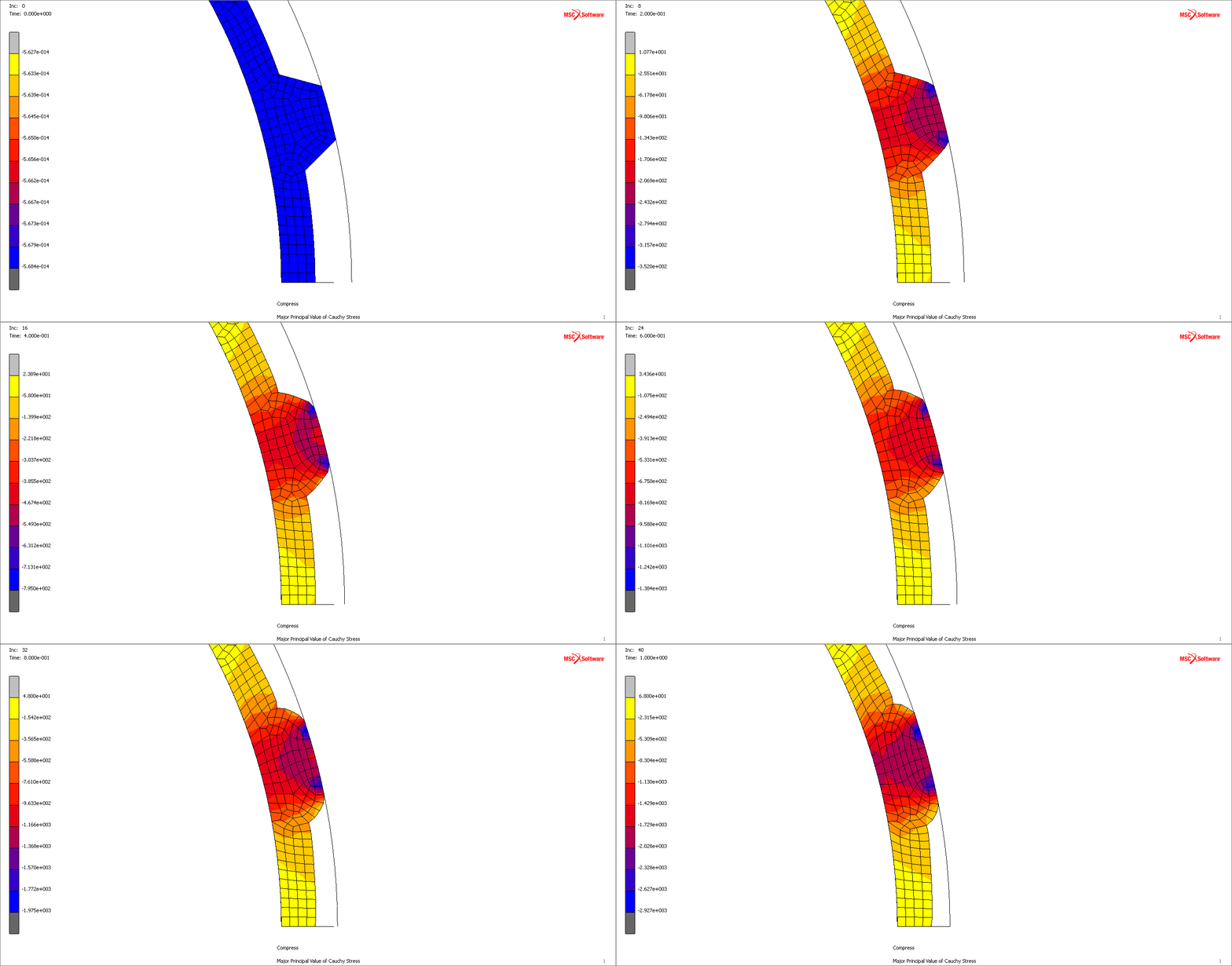
Since the extruded seals do not use molds, there is a reduction in upfront tooling costs with the added benefit of eliminating voids, flash, and flow or parting lines.

For narrow, straight-walled molded or machined grooves, a cost-effective drop-in-place solution is Parker’s Diamond Seal™. Especially useful as manifold or cover seals, and for use with low to moderate system pressures, this cost-efficient diamond-shaped seal with nibs has a smaller footprint and narrower cross-section, which allows more room for other components. The diamond seal design can also be modified to fit round or other complex groove shapes, depending on the application.

For wider straight-walled or dovetail grooves, Parker’s H-Seal™ resists twisting and provides stability. The small contact points of the nibs on the H-shaped design are particularly advantageous with less-than-perfect mating surfaces as they generate high sealing pressures for reliable performance. The H-seal is particularly effective with perimeter, manifold or cover seals, and performs well in face seals with low to high system pressures. Both the geometry of the H-design and the material compound can be adjusted to meet specific application seal loads.

Click Image to Open Full Size in New Tab
Click to open full size in new tabPress-in-Place seal when pressed into groove.
Gif courtesy of Parker TechSeal.

FKM Fluoroelastomer Seals

FKM Fluoroelastomer Seals

FKM Fluorocarbon Elastomer Seals

Designing sealing protection for harsh environments remains a continuing challenge in many industries. One of the best solutions for long-term efficiency and reliability is the use of fluorocarbon elastomers (FKMs).

FKM polymer is the generic reference for fluoroelastomers in ASTM D1418. Initially developed over half a century ago, this synthetic rubber offers outstanding resistance to chemicals, oils, fuels, and temperature extremes, as well as superior performance in other critical areas. According to the International Institute of Synthetic Rubber Producers, today’s FKM polymers have a much broader fluids resistance profile than standard fluoroelastomers. In addition, they are able to withstand strong bases and ketones as well as aromatic hydrocarbons, oils, acids, and steam.

Uses of Fluoroelastomers:

Examples of end-use in industrial, oil and gas, aerospace & defense, automotive, and other manufacturing applications include:FKM Fluoroelastomer Seals

  • Diaphragms
  • Electrical connectors
  • Expansion joints
  • Fuel systems
  • Firewalls
  • Hydraulics systems
  • Jet engines and manifolds
  • Lubrication systems
  • Oilfields
  • Valve liners and stems

Current categories of fluoroelastomers are based on chemical makeup and structure as well as the amount of fluorine added, to meet specific needs in differing environments. Web Seal can provide engineered gaskets, O-rings and molded shapes made from a wide variety of FKM fluoroelastomers, including DuPont’s Viton®.

Define Your Requirements

To help you find the best FKM for your use, be specific in defining your requirements:

What is your chemical media exposure?

Chemical Resistance: Fluoroelastomers perform reliably under severe chemical where many other seal materials cannot survive, especially when in contact with petroleum fuels and many solvents. FKM formulations are tailored for:

  • Mineral-based oils, acids, grease and hydraulic fluids
  • Aliphatic hydrocarbons (butane, propane, natural gas)
  • Chlorinated hydrocarbons (trichloroethylene, carbon tetrachloride)
  • Gasoline, including resistance to rapid gas decompression
  • Steam and hot water (in customized compounds)

What are the temperature ranges of your environment?

FKMs have been developed to meet a wide range of extreme temperatures.

Heat Resistance: FKMs have excellent resistance to high temperatures, up to 204ºC/400ºF.

Cold Flexibility: Fluorocarbon components can create effective seals at temperatures as low as -26ºC/-15ºF.

What mechanical stresses are involved?

FKMs are available for static and a variety of dynamic applications, electrical properties, and hardnesses.

What is the compression load?

Fluorocarbon elastomers have superior compression set and recovery characteristics, especially important in critical areas such as risk to life or danger of environmental damage.

What other issues are important for seal design in your overall application?

  • Aging
  • Flame Retardance
  • Gas Permeability
  • Use in a Vacuum
  • Weathering and Ozone Resistance
  • Installation Process
  • Steam or Hot Water

While FKM fluorocarbon elastomers is a more expensive option, their use may actually save significantly on downtime and replacements, offering a savings of labor, parts and productivity costs over the life of the product.


Photo Credit:

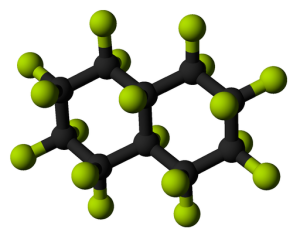
"Perfluorodecalin-3D-balls" by R8R Gtrs (Own work) [CC0], via Wikimedia Commons


Parofluor V8545-75 Seals

Parofluor™ V8545-75 Seals

Space-Age Sealing Material Meets Stringent Spec

Parofluor™ V8545-75 SealsParofluor™ V8545-75, a highly-engineered space-age material from Parker, meets rigorous AMS 7257C standards that aerospace and aircraft manufacturers need for mission-critical sealing applications. This unique perfluorinated compound has proven excellence in thermal stability and resistance to both compression set and fluids and chemicals in extreme temperatures.
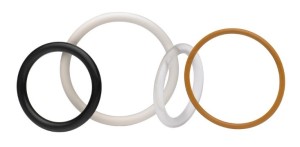
V8545-75 is one of the latest of Parker’s Parofluor compounds formulated to provide reliable and cost-effective sealing capability in critical applications where complete conformance to spec and highest performance are required, especially in aerospace and aircraft industries.

Test results show that Parofluor™ V8546-75 Seals:

  • Offer excellent resiliency and retain elasticity to maintain seal integrity and leak-free performance throughout the service temperature envelope
  • Have an upper operating temperature of 300°C (572°F)
  • Provide consistent sealing functionality in conditions where common fluorocarbon and other traditional elastomers cannot survive, with good to excellent resistance to more than 2,000 fluids and chemicals in extreme temperature environments, including these typical aerospace/aircraft fluids:
    • Parofluor V8545-75 SealsJP-4
    • JP-5
    • JP-8
    • Jet A
    • Jet A1
    • Mobil 254
    • Mil-H-83282
    • Mil-H-5606

Photo Credit:

Lockheed Martin F-22A Raptor JSOH" by Rob Shenk from Great Falls, VA, USA - F-22 Raptor Uploaded by Diaa abdelmoneim. Licensed under CC BY-SA 2.0 via Commons.