Press-in-Place Seals

Press-in-Place Seals

Press-in-Place Seals (PiP) | Drop-in-Place Seals

Press-in-Place (PiP) or "drop-in-place" seals are static seals that overcome installation issues and sealing performance problems common with many typical face seal products, such as an O-ring.

Benefits of Press-in-Place Seals

  • Fool-proof installation
  • High seal retention
  • Cost savings on tooling
  • Less micro-leakage
  • Easy serviceability and quick removal

A unique seal design, PiP incorporates precision-cut ribs or nibs on the outside or inside diameter of an extruded or molded seal with a rectangular cross-section, which keeps the seal firmly in the seal groove regardless of its functional position and without adhesives. Even if the seal is installed upside down, the press-in-place seal will remain firmly in the groove and maintain high sealing performance.
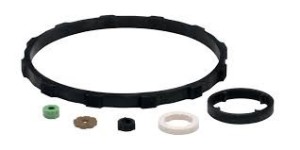
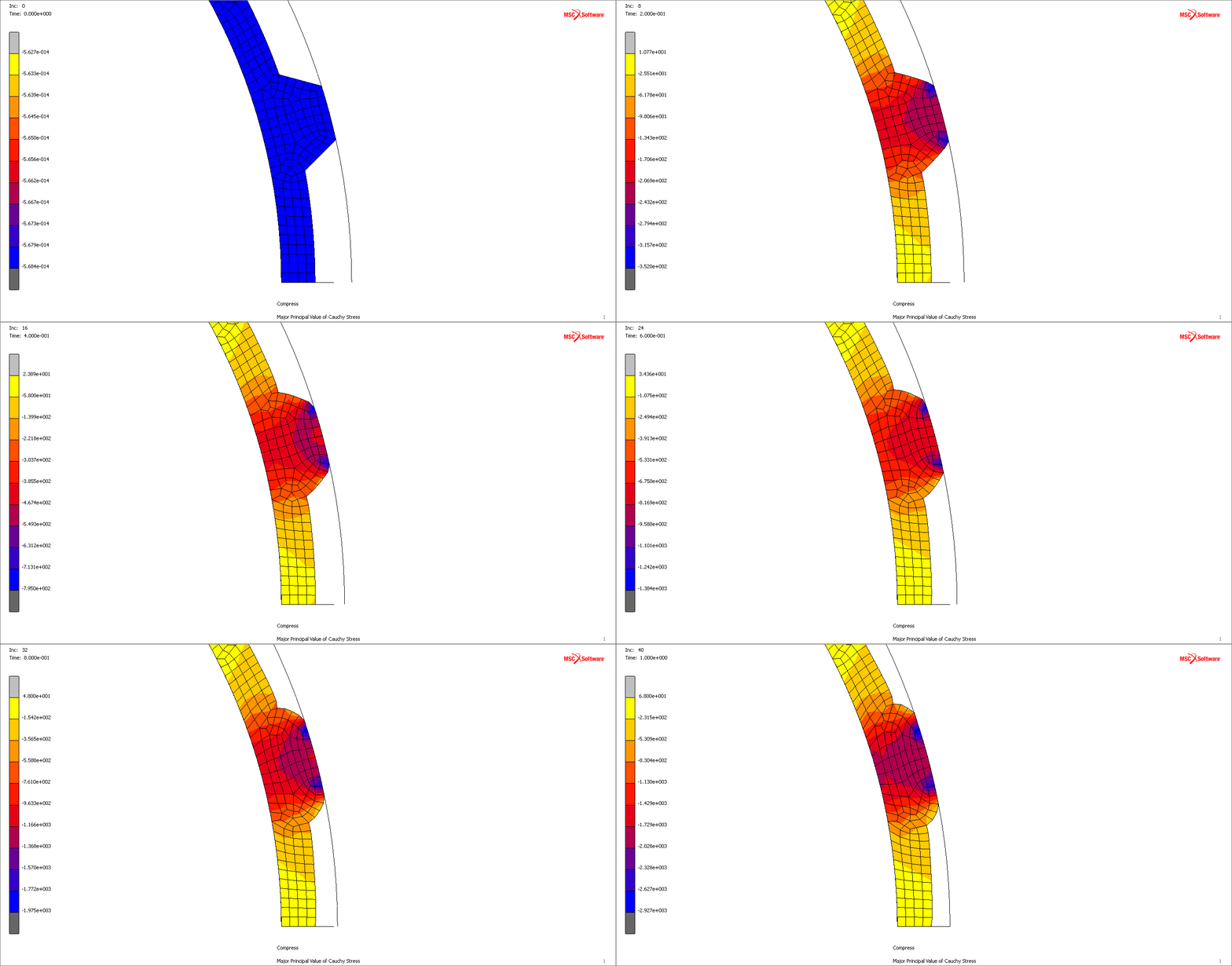
PiP-SealsInterference created between the groove wall and the nibs on the seal allows for high sealing pressures since the seal retains its cross-section, offering a large contact surface area and improving the seal with non-ideal mating surfaces.

Since the extruded seals do not use molds, there is a reduction in upfront tooling costs with the added benefit of eliminating voids, flash, and flow or parting lines.

For narrow, straight-walled molded or machined grooves, a cost-effective drop-in-place solution is Parker’s Diamond Seal™. Especially useful as manifold or cover seals, and for use with low to moderate system pressures, this cost-efficient diamond-shaped seal with nibs has a smaller footprint and narrower cross-section, which allows more room for other components. The diamond seal design can also be modified to fit round or other complex groove shapes, depending on the application.

For wider straight-walled or dovetail grooves, Parker’s H-Seal™ resists twisting and provides stability. The small contact points of the nibs on the H-shaped design are particularly advantageous with less-than-perfect mating surfaces as they generate high sealing pressures for reliable performance. The H-seal is particularly effective with perimeter, manifold or cover seals, and performs well in face seals with low to high system pressures. Both the geometry of the H-design and the material compound can be adjusted to meet specific application seal loads.

Click Image to Open Full Size in New Tab
Click to open full size in new tabPress-in-Place seal when pressed into groove.
Gif courtesy of Parker TechSeal.

Space Shuttle

Importance of O-Rings

[toggle title="Quick Menu"]

[button href="/about-us/contact/" style="emboss" size="medium" width="300px" color="#850d03" textcolor="#ffffff" icon="" iconcolor="#ffffff" ]Contact Us[/button]

[button href="#sidebar" style="emboss" size="medium" width="300px" color="#850d03" textcolor="#ffffff" icon="" iconcolor="#ffffff"]Sealing Products Menu[/button]

[button href="/sitemap/" style="emboss" size="medium" width="300px" color="#850d03" textcolor="#ffffff" icon="" iconcolor="#ffffff"]Main Menu / Sitemap   [/button]

[/toggle]

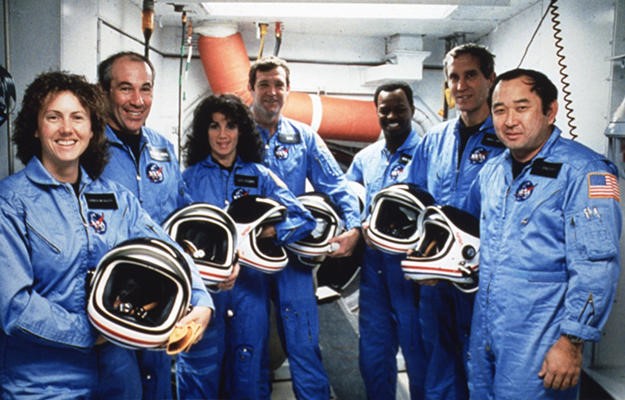
In Grateful Memory of the Challenger Astronauts

(January 18, 2016) In the words of President Reagan "The crew of the space shuttle Challenger honored us by the manner in which they lived their lives. We will never forget them, nor the last time we saw them, this morning, as they prepared for their journey and waved goodbye and "slipped the surly bonds of earth" to "touch the face of God."

As we reflect on the tragic deaths of the crew of the Challenger space shuttle it is also important to remember that until this morning 30 years ago most Americans, other than some engineers and plumbers, even knew or thought about O-Rings.

Since the tragedy of January 28, 1986, the words O-Ring and Challenger will be forever linked.

And while our customers many think of the parts they specify and purchase as “just an O-Ring”, we know differently. Because we know how important it is to select the correct material, properly design the gland and understand the tolerances, we have an obligation to our customers to make sure they are taking all of these factors into consideration.

I say the above not to trivialize the deaths of the Challenger crew but as a reminder that what we do every day has a meaningful impact on the lives and safety of our customers and theirs.

John F. Hurley
President, CEO
Web Seal Inc.

FKM Fluoroelastomer Seals

FKM Fluoroelastomer Seals

FKM Fluorocarbon Elastomer Seals

Designing sealing protection for harsh environments remains a continuing challenge in many industries. One of the best solutions for long-term efficiency and reliability is the use of fluorocarbon elastomers (FKMs).

FKM polymer is the generic reference for fluoroelastomers in ASTM D1418. Initially developed over half a century ago, this synthetic rubber offers outstanding resistance to chemicals, oils, fuels, and temperature extremes, as well as superior performance in other critical areas. According to the International Institute of Synthetic Rubber Producers, today’s FKM polymers have a much broader fluids resistance profile than standard fluoroelastomers. In addition, they are able to withstand strong bases and ketones as well as aromatic hydrocarbons, oils, acids, and steam.

Uses of Fluoroelastomers:

Examples of end-use in industrial, oil and gas, aerospace & defense, automotive, and other manufacturing applications include:FKM Fluoroelastomer Seals

  • Diaphragms
  • Electrical connectors
  • Expansion joints
  • Fuel systems
  • Firewalls
  • Hydraulics systems
  • Jet engines and manifolds
  • Lubrication systems
  • Oilfields
  • Valve liners and stems

Current categories of fluoroelastomers are based on chemical makeup and structure as well as the amount of fluorine added, to meet specific needs in differing environments. Web Seal can provide engineered gaskets, O-rings and molded shapes made from a wide variety of FKM fluoroelastomers, including DuPont’s Viton®.

Define Your Requirements

To help you find the best FKM for your use, be specific in defining your requirements:

What is your chemical media exposure?

Chemical Resistance: Fluoroelastomers perform reliably under severe chemical where many other seal materials cannot survive, especially when in contact with petroleum fuels and many solvents. FKM formulations are tailored for:

  • Mineral-based oils, acids, grease and hydraulic fluids
  • Aliphatic hydrocarbons (butane, propane, natural gas)
  • Chlorinated hydrocarbons (trichloroethylene, carbon tetrachloride)
  • Gasoline, including resistance to rapid gas decompression
  • Steam and hot water (in customized compounds)

What are the temperature ranges of your environment?

FKMs have been developed to meet a wide range of extreme temperatures.

Heat Resistance: FKMs have excellent resistance to high temperatures, up to 204ºC/400ºF.

Cold Flexibility: Fluorocarbon components can create effective seals at temperatures as low as -26ºC/-15ºF.

What mechanical stresses are involved?

FKMs are available for static and a variety of dynamic applications, electrical properties, and hardnesses.

What is the compression load?

Fluorocarbon elastomers have superior compression set and recovery characteristics, especially important in critical areas such as risk to life or danger of environmental damage.

What other issues are important for seal design in your overall application?

  • Aging
  • Flame Retardance
  • Gas Permeability
  • Use in a Vacuum
  • Weathering and Ozone Resistance
  • Installation Process
  • Steam or Hot Water

While FKM fluorocarbon elastomers is a more expensive option, their use may actually save significantly on downtime and replacements, offering a savings of labor, parts and productivity costs over the life of the product.


Photo Credit:

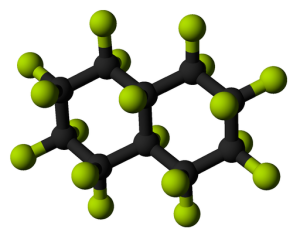
"Perfluorodecalin-3D-balls" by R8R Gtrs (Own work) [CC0], via Wikimedia Commons


Parofluor V8545-75 Seals

Parofluor™ V8545-75 Seals

Space-Age Sealing Material Meets Stringent Spec

Parofluor™ V8545-75 SealsParofluor™ V8545-75, a highly-engineered space-age material from Parker, meets rigorous AMS 7257C standards that aerospace and aircraft manufacturers need for mission-critical sealing applications. This unique perfluorinated compound has proven excellence in thermal stability and resistance to both compression set and fluids and chemicals in extreme temperatures.
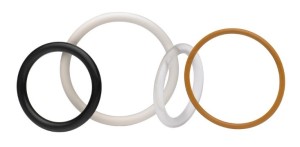
V8545-75 is one of the latest of Parker’s Parofluor compounds formulated to provide reliable and cost-effective sealing capability in critical applications where complete conformance to spec and highest performance are required, especially in aerospace and aircraft industries.

Test results show that Parofluor™ V8546-75 Seals:

  • Offer excellent resiliency and retain elasticity to maintain seal integrity and leak-free performance throughout the service temperature envelope
  • Have an upper operating temperature of 300°C (572°F)
  • Provide consistent sealing functionality in conditions where common fluorocarbon and other traditional elastomers cannot survive, with good to excellent resistance to more than 2,000 fluids and chemicals in extreme temperature environments, including these typical aerospace/aircraft fluids:
    • Parofluor V8545-75 SealsJP-4
    • JP-5
    • JP-8
    • Jet A
    • Jet A1
    • Mobil 254
    • Mil-H-83282
    • Mil-H-5606

Photo Credit:

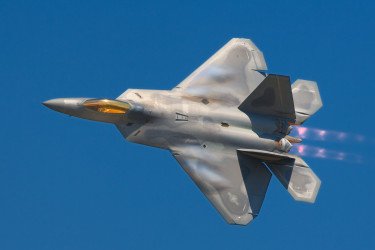
Lockheed Martin F-22A Raptor JSOH" by Rob Shenk from Great Falls, VA, USA - F-22 Raptor Uploaded by Diaa abdelmoneim. Licensed under CC BY-SA 2.0 via Commons.